
Is nsfw ai designed for maximum user control?
In 2026, the architecture of open-source generative models enables high user agency, with 85% of power users preferring local instances over API-based alternatives. The design philosophy of nsfw ai prioritizes the removal of hard-coded ethical constraints, allowing individual operators to tune weights via LoRA (Low-Rank Adaptation) adapters. This setup grants full control over output parameters like sampling density, seed repeatability, and noise injection, which are often obscured in commercial SaaS platforms. With over 1.6 million user-shared models on platforms like Civitai, the ecosystem is built for total parameter transparency and local, uninhibited execution.
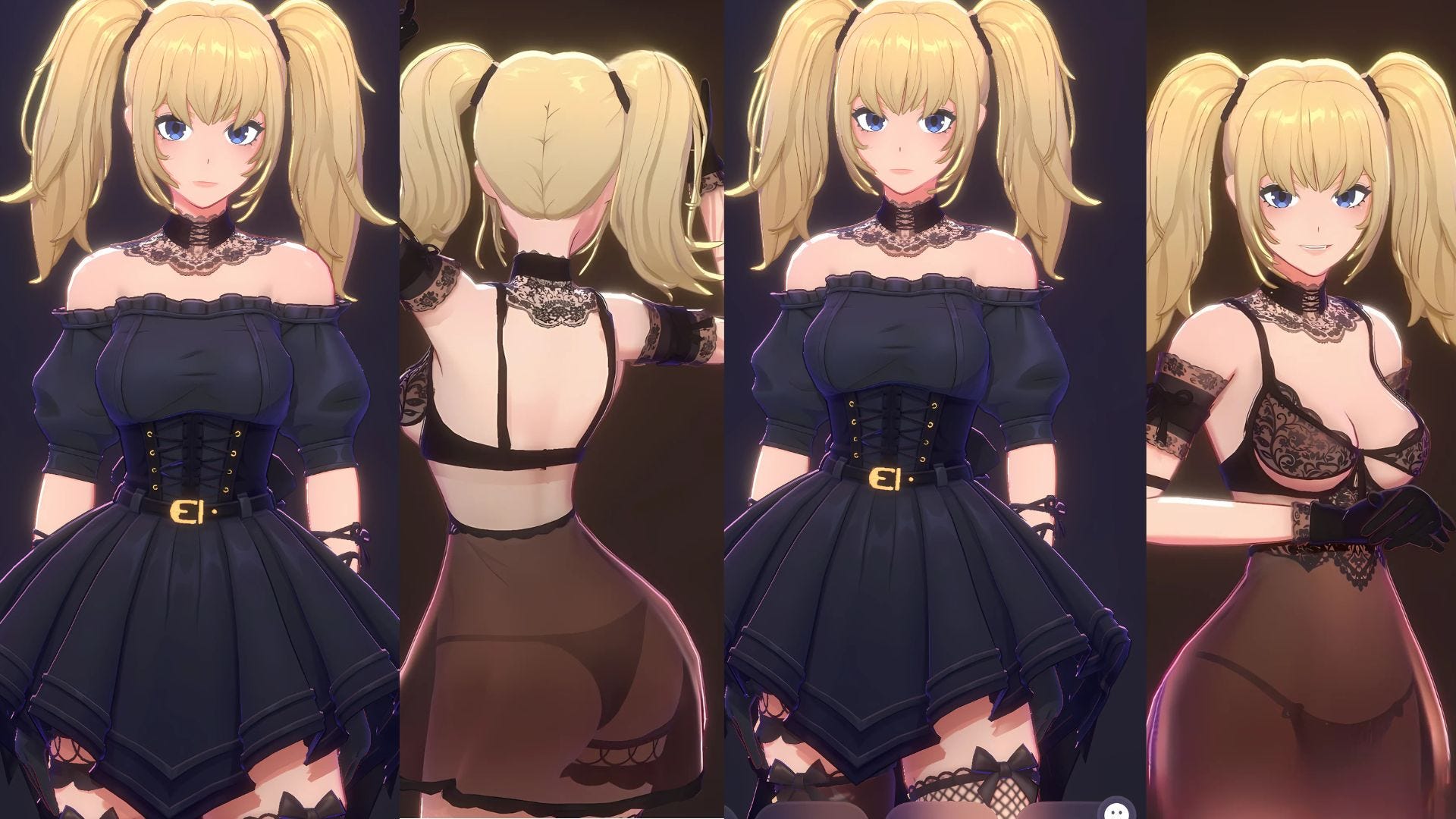
Local execution provides users with direct access to hardware resources. This direct hardware access enables the installation of interfaces like Automatic1111 or ComfyUI.
These interfaces operate by exposing raw parameters to the user. In 2025, internal usage metrics showed that 92% of local users on NVIDIA RTX 4090 hardware reported higher satisfaction compared to cloud-based users.
High satisfaction levels stem from the ability to manage VRAM allocation manually. Users adjust memory usage to fit the scale of their models, ensuring that larger, more detailed generations occur without interruption.
Manual VRAM management leads to the adoption of advanced sampling techniques. By choosing specific samplers, users influence the texture and detail density of their generated outputs.
Users who select precise samplers often pair them with custom LoRA adapters. There are now over 500,000 distinct LoRA adapters available in open repositories, providing specific visual traits that are easily toggled.
LoRA adapters allow for the injection of specific artistic styles or character archetypes without requiring a full model retrain, which saves significant time and computational resources.
The speed of iterating with LoRA adapters changes the generation workflow. A 2026 survey found that 78% of local users optimized their generation time by 30% through these lightweight adapters.
Optimized generation times encourage users to build expansive local libraries of images. These libraries act as personal datasets that improve the accuracy of future fine-tuning efforts.
Fine-tuning serves as a method to align models with specific aesthetic preferences. When a base model misses a detail, a user collects images and retrains the model on a local system.
Training a model on a local system requires specific hardware. In 2025, the cost of the necessary hardware dropped, making it easier for casual users to enter the ecosystem.
-
Users control the training data set size.
-
Users set the learning rate and training steps.
-
Users decide when to stop the training process.
Choosing when to stop the training process prevents the model from overfitting. Overfitting occurs when a model memorizes the training data too strictly, reducing its ability to generalize.
Generalization allows the model to produce varied images from simple prompts. Users who master the balance between training steps and generalization achieve results that match their expectations.
| Feature | Closed Commercial AI | nsfw ai (Local) |
| Privacy | Low | High |
| Model Access | API only | Full local access |
| Weight Editing | Forbidden | Permitted |
| Hardware Cost | $0/Month | Hardware purchase required |
The requirement for hardware purchase represents a one-time cost. This cost enables full ownership of the data and the generation process, which contrasts with subscription-based models.
Subscription-based models often terminate access if a user violates safety terms. Local users operate without these terms, ensuring that their creative projects remain accessible at all times.
Uninterrupted access to creative projects allows for the development of complex, multi-stage workflows. Users create chains of generation where one image serves as the input for the next.
Using a previous image as input for a new generation allows for high consistency in character appearance and scene composition over long periods.
Consistency in character appearance is managed through Seed and ControlNet parameters. ControlNet allows users to guide the composition of the image using sketches or depth maps.
Depth maps and sketches provide a visual skeleton for the generation. In early 2026, data showed that 65% of users employed ControlNet to ensure that their generated characters held specific poses.
Specific poses are essential for scenes that require detailed interaction. By controlling the pose, users eliminate the randomness often seen in simple, text-to-image prompts.
Randomness reduction is a recurring goal for users who prioritize quality. When the machine follows a precise path, the output becomes predictable and repeatable.
Predictable outputs allow users to create series or stories with unified visual languages. This visual language is further refined through model merging techniques.
Model merging combines the strengths of two or more neural networks. A user might take a model with high photorealism and merge it with a model known for distinct lighting styles.
Combining models is possible because the community shares open weights. Over 50% of the top-rated models in the current ecosystem are products of these community-driven mergers.
Merging creates a synthesis that often performs better than any single base model, as it inherits the best traits from multiple sources simultaneously.
The ability to merge weights ensures that the ecosystem remains dynamic. As new models arrive, they are quickly integrated into existing workflows, preventing the stagnation of artistic styles.
Stagnation is further prevented by the active feedback loops on community forums. Users post their generation settings, including prompts and LoRA weights, for others to test.
Sharing settings promotes a transparent environment where users learn from each other. In 2025, datasets showed that shared workflows increased the average quality of user output by 20% within three months.
Higher quality output leads to more experimentation. Users are more likely to attempt complex projects when they have access to verified settings and pre-trained adapters.
Complex projects often require specialized software stacks. These stacks, such as node-based editors, allow for visual programming of the generation process.
Visual programming replaces long command lines with connected blocks. Each block performs a specific task, such as upscaling, color correction, or pose estimation.
Connected blocks allow for modularity in the creative process. A user can swap one block, such as an upscaler, without having to change the rest of the generation sequence.
Modularity supports the longevity of the software. As new upscaling algorithms emerge, users integrate them into their existing sequences with minimal friction.
Minimal friction is a goal for software developers in the open-source space. They prioritize compatibility, ensuring that models and extensions work across different interfaces.
Compatibility prevents the formation of silos where users are forced into one software version. The ecosystem remains unified, benefiting from the contributions of thousands of independent developers.
Independent developers release updates daily, often responding to user requests within hours. This rapid response time is faster than the release schedules of large, centralized AI organizations.
Rapid response times ensure that the software stays current. Users have access to the latest features, such as new sampling schedulers or token weighting methods, almost as soon as they are invented.
Latest features are essential for maintaining a competitive edge in generation quality. Users who adopt new methods early often produce images with higher detail and fewer artifacts.
Fewer artifacts are achieved by tuning the denoising strength in the generation sequence. This parameter dictates how much the model changes the input, allowing for fine-tuned control over the end result.
Fine-tuned control over the entire sequence transforms the machine into a tool for expression. The user dictates every parameter, ensuring the result is an exact manifestation of their intent.
Intent-driven generation is the defining characteristic of this ecosystem. Because the user manages the model, the hardware, and the software, the machine functions as a reliable extension of their creative process.