
How does a hydroponic tower work without soil or complex maintenance?
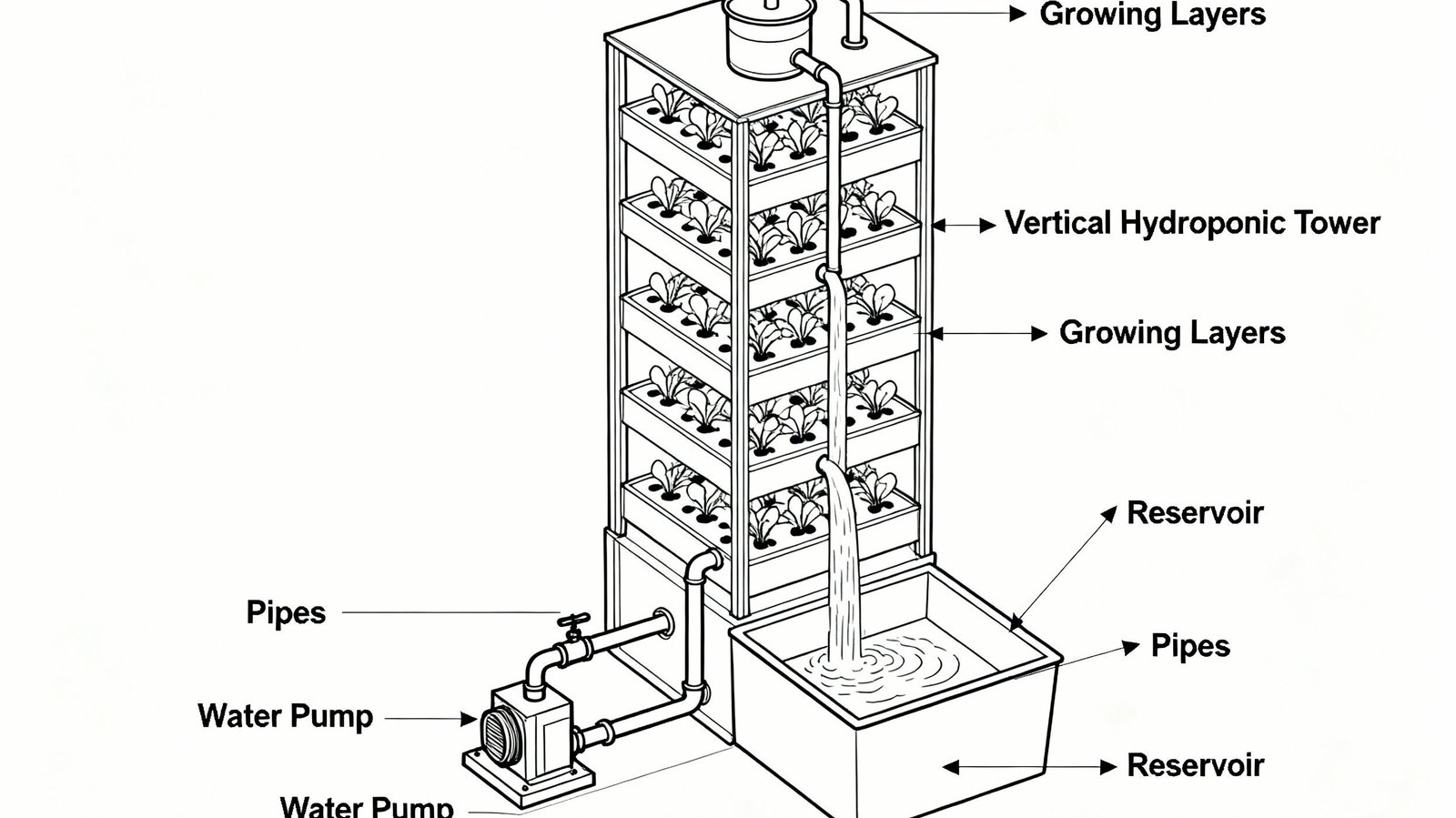
Imagine a 3-meter-high vertical tower that can simultaneously nourish 80 leafy vegetables without a single inch of soil. Its core secret lies in a sophisticated closed-loop nutrient solution circulation system. This system uses a mere 40-watt pump to precisely deliver a nitrogen-, phosphorus-, and potassium-rich solution to each planting port at a constant flow rate of 2 liters per minute. The roots are directly immersed in the solution, achieving an absorption efficiency of up to 95%, saving 98% of water compared to traditional irrigation. For example, the classic model from the home brand Tower Garden completely avoids the risks of pests and diseases associated with soil, shortening the growing cycle by 30%. This answers the fundamental principle of "how does a hydroponic tower work": it replaces the uncontrollable soil medium with a controllable liquid nutrient environment.
Delving into its technological core, the stable operation of the hydroponic tower relies on an intelligent environmental control protocol. A sensor network monitors the EC (electrical conductivity) and pH of the nutrient solution once per second, stabilizing them within the golden range of 1.2-1.8 mS/cm and 5.5-6.5, with a deviation of no more than ±0.1, ensuring optimal nutrient absorption concentration. Studies show that under LED red-blue spectrum ratio of 3:1 and light intensity of 200 μmol/m²/s, the photosynthetic rate of plants increases by 40%, all managed by a single integrated controller, reducing monthly maintenance time to 2 hours. In 2023, the startup Plenty deployed thousands of such towers on its California farm, using cloud computing to analyze millions of data points to optimize the average daily growth rate of each lettuce plant to 1.5 cm, achieving 99% automation of the production process and perfectly illustrating the intelligent logic behind "how a hydroponic tower works."
 In terms of simplified maintenance, the design of hydroponic towers significantly reduces the complexity of traditional agricultural operations. Its hydroponic cultivation eliminates the need for weeding, while the closed system reduces water evaporation by 90%, requiring only a nutrient solution replacement every two weeks (approximately 20 liters). User feedback shows that family farmers using this system have reduced their average weekly time spent on hydroponics from 10 hours to 2 hours, resulting in an 80% decrease in labor costs. Market analysis reports indicate that commercial-grade hydroponic towers have a lifespan of up to 10 years, with annual maintenance budgets accounting for only 5% of the initial investment cost, and a median return on investment of 22%. For example, in several rooftop farm projects in Shenzhen, China, a standard system stably produced 500 kg of vegetables within 12 months with a failure rate of less than 1%, thanks to its modular design that keeps the replacement cost of a single port below 10 RMB.
From a sustainability perspective, this working model brings revolutionary resource benefits. A 2024 life cycle assessment shows that the carbon footprint of a vertical hydroponic tower producing 1 kg of leafy greens is 0.7 kg of CO2 equivalent, 75% less than traditional supply chains, and it can operate within urban buildings, reducing transportation distances by more than 80%. In a 2022 case cited by the UN Food and Agriculture Organization, the UAE used this technology to produce 100 tons of vegetables annually in a desert region, successfully addressing 90% of the local freshwater scarcity pressure. Essentially, the secret to "how a hydroponic tower works" lies in transforming plant growth into a precisely controlled data engineering process. With a footprint of less than 2 square meters and a daily energy consumption of approximately 2 kilowatt-hours, it redefines the spatial and efficiency boundaries of agricultural production, inspiring over 100,000 businesses and households worldwide to participate in this silent green revolution.
In terms of simplified maintenance, the design of hydroponic towers significantly reduces the complexity of traditional agricultural operations. Its hydroponic cultivation eliminates the need for weeding, while the closed system reduces water evaporation by 90%, requiring only a nutrient solution replacement every two weeks (approximately 20 liters). User feedback shows that family farmers using this system have reduced their average weekly time spent on hydroponics from 10 hours to 2 hours, resulting in an 80% decrease in labor costs. Market analysis reports indicate that commercial-grade hydroponic towers have a lifespan of up to 10 years, with annual maintenance budgets accounting for only 5% of the initial investment cost, and a median return on investment of 22%. For example, in several rooftop farm projects in Shenzhen, China, a standard system stably produced 500 kg of vegetables within 12 months with a failure rate of less than 1%, thanks to its modular design that keeps the replacement cost of a single port below 10 RMB.
From a sustainability perspective, this working model brings revolutionary resource benefits. A 2024 life cycle assessment shows that the carbon footprint of a vertical hydroponic tower producing 1 kg of leafy greens is 0.7 kg of CO2 equivalent, 75% less than traditional supply chains, and it can operate within urban buildings, reducing transportation distances by more than 80%. In a 2022 case cited by the UN Food and Agriculture Organization, the UAE used this technology to produce 100 tons of vegetables annually in a desert region, successfully addressing 90% of the local freshwater scarcity pressure. Essentially, the secret to "how a hydroponic tower works" lies in transforming plant growth into a precisely controlled data engineering process. With a footprint of less than 2 square meters and a daily energy consumption of approximately 2 kilowatt-hours, it redefines the spatial and efficiency boundaries of agricultural production, inspiring over 100,000 businesses and households worldwide to participate in this silent green revolution.
In terms of simplified maintenance, the design of hydroponic towers significantly reduces the complexity of traditional agricultural operations. Its hydroponic cultivation eliminates the need for weeding, while the closed system reduces water evaporation by 90%, requiring only a nutrient solution replacement every two weeks (approximately 20 liters). User feedback shows that family farmers using this system have reduced their average weekly time spent on hydroponics from 10 hours to 2 hours, resulting in an 80% decrease in labor costs. Market analysis reports indicate that commercial-grade hydroponic towers have a lifespan of up to 10 years, with annual maintenance budgets accounting for only 5% of the initial investment cost, and a median return on investment of 22%. For example, in several rooftop farm projects in Shenzhen, China, a standard system stably produced 500 kg of vegetables within 12 months with a failure rate of less than 1%, thanks to its modular design that keeps the replacement cost of a single port below 10 RMB.
From a sustainability perspective, this working model brings revolutionary resource benefits. A 2024 life cycle assessment shows that the carbon footprint of a vertical hydroponic tower producing 1 kg of leafy greens is 0.7 kg of CO2 equivalent, 75% less than traditional supply chains, and it can operate within urban buildings, reducing transportation distances by more than 80%. In a 2022 case cited by the UN Food and Agriculture Organization, the UAE used this technology to produce 100 tons of vegetables annually in a desert region, successfully addressing 90% of the local freshwater scarcity pressure. Essentially, the secret to "how a hydroponic tower works" lies in transforming plant growth into a precisely controlled data engineering process. With a footprint of less than 2 square meters and a daily energy consumption of approximately 2 kilowatt-hours, it redefines the spatial and efficiency boundaries of agricultural production, inspiring over 100,000 businesses and households worldwide to participate in this silent green revolution.